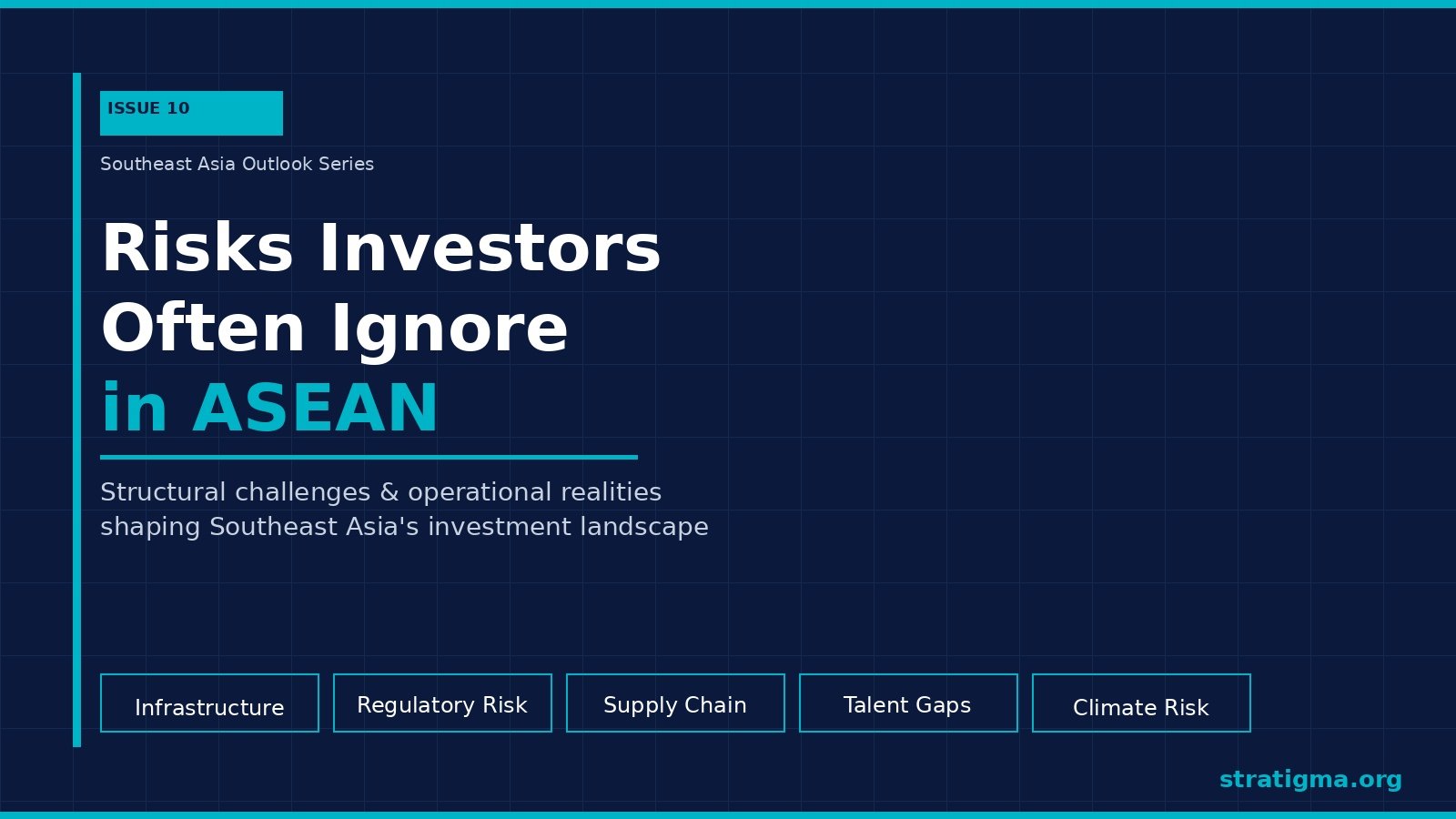
Risks Investors Often Ignore In ASEAN
A balanced perspective on the structural challenges and operational realities shaping Southeast Asia’s investment landscape. A strategic briefing on the risks that accompany ASEAN’s growth trajectory — and why understanding them strengthens strategic positioning.
Context
Southeast Asia has become one of the most attractive emerging regions for investors seeking manufacturing diversification, growing consumer markets and expanding digital economies. The narrative surrounding the region often focuses on opportunity, growth and long-term potential.
However, emerging markets rarely follow linear trajectories. Rapid growth is often accompanied by structural challenges that require careful planning and long-term perspective.
Understanding risk does not weaken the investment case — it strengthens strategic positioning.
What’s Changing?
1) Infrastructure Development Remains Uneven
While major cities and industrial zones benefit from modern infrastructure, development levels vary across countries and regions. Challenges may include:
- Logistics bottlenecks outside key corridors
- Uneven energy reliability
- Varying quality of transport networks
Infrastructure progress is significant, but uneven development remains a factor.
2) Regulatory Environments Continue to Evolve
Rapid economic growth often brings policy adjustments and regulatory change. Investors may encounter:
- Evolving investment frameworks
- Changing tax and compliance requirements
- Sector-specific policy shifts
Regulatory evolution is part of economic development and requires adaptability.
3) Supply Chain Complexity Across Multiple Jurisdictions
Regional integration encourages multi-country supply chains, but cross-border operations introduce complexity. Companies must navigate:
- Customs procedures
- Varying legal frameworks
- Different administrative processes
Managing regional operations requires coordination and long-term planning.
4) Talent and Skills Gaps in High-Growth Sectors
Economic expansion can outpace workforce development. Challenges may include:
- Shortages of specialized technical skills
- Training and workforce development needs
- Competition for skilled labor
Human capital development remains an ongoing process.
5) Climate and Environmental Risks
Climate change is increasingly shaping infrastructure planning, agriculture and urban development across the region. Extreme weather events and environmental pressures can affect project timelines and long-term planning.
Resilience planning is becoming a key component of investment strategies.
Why It Matters
Risk awareness is not a deterrent to investment — it is a prerequisite for sustainable engagement.
Understanding operational and regulatory realities enables investors to design resilient and long-term strategies.
Emerging markets reward preparation and patience.
Strategic Insight
Southeast Asia’s growth trajectory remains compelling, but successful engagement requires a balanced perspective.
Opportunities are significant. So is the importance of risk awareness and long-term planning.
Investors who combine strategic vision with realistic risk assessment are best positioned to benefit from the region’s continued transformation.